
The Value of Hiring Outside Your Industry

The Value of Hiring Outside Your Industry
Why looking beyond “industry experience” can unlock real business value
One of the most common requirements I hear when taking a brief is: “they must have industry experience.” Sometimes, that’s absolutely necessary. But more often than not, it’s quietly shrinking the talent pool – and in some cases, holding the business back from the very improvements it’s trying to make.
Working across procurement, supply chain and engineering roles in the Hunter, I’ve seen some of the strongest hires come from outside the immediate industry. It’s a region built for this kind of cross-pollination – mining, manufacturing, energy, defence, infrastructure and ports all sit within an hour of each other and the businesses that recognise it are quietly building stronger teams than their competitors.
The Hidden Cost of Hiring Like-for-Like
Hiring from a direct competitor or a similar business feels safe. They understand the terminology, they’ve worked with similar systems and they can usually step in with minimal ramp-up. The trade-off is the part most employers don’t weigh up: you’re also importing the same ways of solving problems, the same assumptions about “how things are done” and the same blind spots that exist across the industry.
Over time, that compounds. Especially in procurement, supply chain, engineering and operations – functions where continuous improvement is the whole point – hiring the same profile repeatedly can quietly entrench the very inefficiencies you’re paying that person to fix.
What Hiring Outside Industry Actually Brings
- Fresh Perspective on Old Problems
Someone from a different industry isn’t tied to your internal norms. They’re more likely to ask why something is done a certain way, whether there’s a more efficient process, and what’s actually driving a particular decision. That kind of curiosity is often where real improvement starts – whether it’s reducing cost, improving supplier performance, or removing inefficiencies that have been accepted for years simply because no one new was around to question them.
- Proven Ideas from Other Sectors
Different industries solve similar problems in completely different ways. Manufacturing businesses often excel in lean processes and continuous improvement. Mining and resources tend to be strong in risk management and compliance discipline. FMCG and retail are typically faster-paced and more data-driven. When you bring someone across, you’re not taking a risk – you’re importing ideas that have already been tested and proven somewhere else.
- Stronger Change and Improvement Capability
Candidates who have successfully moved industries before are usually faster to learn, quicker to adapt, and more comfortable challenging the existing way of working. Those are exactly the traits you want in roles focused on transformation, optimisation or growth. In many cases, it isn’t industry knowledge that drives success in those roles – it’s the ability to influence, analyse and implement change.
- Broader Commercial Thinking
Someone who has worked across multiple sectors tends to bring a more balanced commercial lens. They’re less likely to default to “this is how we’ve always done it” and more likely to weigh cost, risk and value from several angles, challenge legacy decisions, and connect operational outcomes back to broader business goals. That’s a meaningful upgrade in any function that touches spend, supplier relationships or capital decisions.
What This Looks Like in Practice
This isn’t theory. It’s something I see regularly across the Hunter. A procurement professional moves from manufacturing into a mining business and within their first six months, identifies supplier consolidation and contract structure opportunities the existing team had stopped seeing. An engineer transitions from consultancy into heavy industry and reshapes how capital projects are scoped and handed over to operations, simply because they’ve seen what good project governance looks like elsewhere. A supply chain lead moves from FMCG into industrial and brings demand-planning rigour to a business that had been running on spreadsheets and supplier goodwill.
In every case, the value didn’t come from knowing the product – it came from everything they brought with them.
Where Cross-Industry Hiring Works Best
Hiring outside industry tends to work particularly well when the role is process-driven rather than product-specific, when the core skills are clearly transferable (procurement, contracts, supply chain, engineering, quality, operations), when the business is going through change, growth or transformation, and when there is genuine onboarding and internal support to bring someone up to speed. In a region like the Hunter – where the same skill sets sit across mining, manufacturing, energy and infrastructure – that kind of cross-industry movement is a real advantage when it’s done intentionally.
When It Doesn’t Make Sense
It’s also important to be realistic. Cross-industry hiring isn’t always the right call. If highly specialised technical knowledge is needed from day one, if regulatory or compliance requirements are strict and unforgiving, or if there isn’t the bandwidth internally to support someone through a learning curve, an industry hire is often the better answer. The point isn’t to remove industry experience from your criteria – it’s to understand when it’s genuinely critical and when it has quietly become a default.
Final Thought
The strongest teams I see aren’t built by hiring the same profile over and over again. They’re built by combining deep industry knowledge with fresh, external perspective – and trusting that the right person can bridge the gap faster than the org chart suggests.
If you’re struggling to find the “perfect” industry match, it might be worth asking a different question: do they need to come from your industry, or do they just need to improve how your business operates?
If you’d like to talk through what cross-industry hiring could look like for a specific role you’re working on – or have a candid conversation about the transferable talent currently sitting in the Hunter market – reach out anytime at lh@asr.com.au.
ARE YOU CURRENTLY LOOKING TO HIRE?
ASR Recruitment is a boutique recruitment agency specialising in Technology & Digital, Marketing and Communications, Accounting & Finance, Construction, Human Resources, Engineering, Safety, Procurement, Transport & Logistics, Manufacturing, Legal & Risk, Administration & Customer Service.
Find out more by visiting our Clients page!
Looking for a new role? Search Jobs here.
From our blog
Read our articles below to see our latest insights.

Why you need to start your New Year recruitment processes now
As the year draws to a close, most companies are gearing up for well-deserved holiday celebrations and end-of-year reflections. While the holiday season is a time for rest and recovery, it also presents a strategic opportunity to get ahead of the curve by initiating your recruitment process for new-year hires. Stay ahead of the…
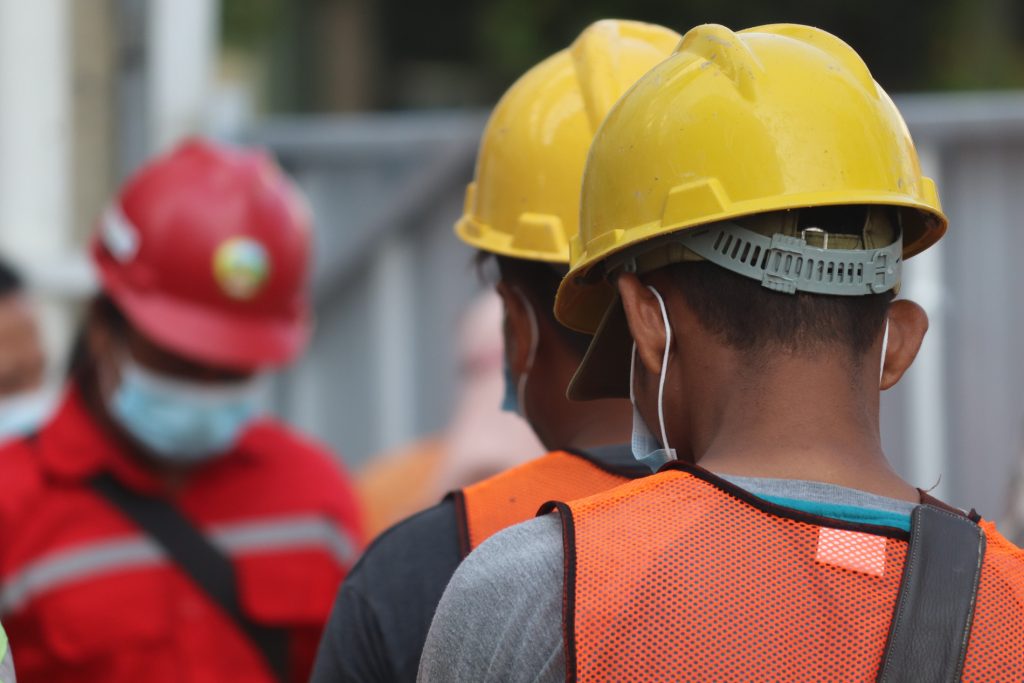
Promoting safety all year round: National Safe Work Month, October 2023
As we bid farewell to October, we also conclude National Safe Work Month. This annual event is a timely reminder that workplace safety should be a year-round priority, not just a one-month affair. In this blog, we’ll explore the importance of workplace safety, reflect on the lessons learned during this dedicated month, and discuss how…

Deciphering ‘cultural fit’ in business: Why it matters
In the modern workplace, the term “cultural fit” has become increasingly prevalent in job descriptions and interviews. Companies emphasise the importance of hiring employees who align with their organisational culture. But what exactly does “cultural fit” mean, and why is it so crucial for businesses today? Defining Cultural Fit Cultural fit refers to the…

Navigating a change in your career path: A comprehensive guide
Deciding to switch careers is a significant undertaking, often fuelled by a desire for personal growth, evolving interests, economic considerations, or the pursuit of a more fulfilling vocation. Making this transition a success requires careful planning and strategic steps. Self-assessment and reflection Begin by conducting a thorough self-assessment. Evaluate your skills, strengths, weaknesses, values,…

Fostering sustainable high-performance teams
In today’s Australian workforce, building high-performance teams that can thrive in the long term is essential. Here are streamlined strategies for creating teams that excel while adapting to our dynamic business landscape. Embrace diversity and inclusion: Leverage Australia’s diverse talent pool to enhance creativity and adaptability within your team. Invest in continuous learning: Keep…

Embracing diversity and inclusion: Fuelling a thriving company culture
In today’s hyperconnected and dynamic business landscape, companies are increasingly recognising the invaluable benefits of fostering diversity and inclusion within their workplaces. Beyond meeting legal and moral obligations, cultivating a diverse and inclusive workforce offers numerous advantages that not only enrich company culture but also drive innovation, foster creativity, and enhance problem-solving. Let’s explore why…

The power of perspective: Understanding the full story before making assumptions in a professional setting
In the fast-paced world of business and professional interactions, assumptions are like silent saboteurs that can hinder progress, collaboration, and success. Making assumptions without fully understanding the context or the complete story is a common human tendency, but it’s also a habit that can lead to miscommunication, conflict, and missed opportunities. The Dangers…

Shaping a sustainable future: The role of Engineering in building a greener world
In an era where environmental concerns are at the forefront of global discussions, the role of sustainability in engineering has never been more crucial. As a recruitment consultant working in the engineering industry, you have a unique opportunity to connect talented professionals with companies that are driving positive change. In this blog, we will delve…
Humanising the future of work: HR Trends for 2023
The world of work is undergoing a profound transformation, driven by rapid technological advancements, changing demographics, and evolving employee expectations. As we step into 2023, human resources (HR) professionals must stay ahead of the curve and adapt to the shifting landscape. In this article, we explore 12 HR trends that are shaping the future of…

Exciting scenarios where accountants can benefit from Excel alternatives
The emergence of electronic spreadsheets played a pivotal role in propelling the business PC revolution during the early 1980s. Ever since then, Microsoft Excel has stood as an indispensable tool for accountants. However, its significance surpasses that of a mere digital ledger; Excel’s capabilities have advanced considerably, offering a diverse array of features for sophisticated…